
Beyond the Synthetic Panics of the Digital Age
Manipulated video can travel around the world before a newsroom has confirmed where it came from, when it was recorded, or whether the apparent event happened at all. A convincing clip may be reposted thousands of times, stripped of its original caption, compressed by several platforms, and presented as breaking news to audiences that have no access to the underlying file. The result is not only misinformation, but a difficult editorial environment in which public anxiety about synthetic media can become news in its own right. Readers evaluating video verification methods need to understand that visual plausibility is only one part of the question.
Headlines often imply that an automated deepfake detector can deliver a simple verdict. Real investigations are less tidy. Detection models can produce useful signals, but their performance changes with image quality, compression, lighting, editing, and the type of generative system involved. Professional verification therefore treats software as one instrument in a larger process. The strongest assessments combine frame-level examination, audio analysis, source tracing, and open-source intelligence with ordinary journalistic questions about who published the material, what it claims to show, and whether independent evidence supports it.
Why Algorithmic Deepfake Detectors Fall Short Under Pressure
Automated detection models are trained to identify patterns associated with synthetic imagery, but those patterns are not permanent signatures. A video downloaded from a social platform may have been resized, re-encoded, sharpened, or reduced to a low bitrate. Each transformation can obscure the artifacts a detector expects to see or introduce new ones that resemble manipulation. Poor lighting, motion blur, unusual camera angles, subtitles, and partial faces create further complications. A detector may therefore return a high-confidence result on an authentic recording or miss a carefully produced synthetic clip.
A newsroom also has to distinguish between a probability score and an evidentiary finding. A result such as “likely manipulated” does not necessarily explain which frames triggered the assessment, whether the model was tested on comparable material, or how its accuracy changes after online compression. In the Dungeons and Deepfakes study, researchers from the University of Mississippi and Rochester Institute of Technology observed 24 journalists using traditional methods and a detection tool called DeFake. Participants often began with established sources, but some leaned too heavily on the software when its result confirmed an existing belief.
That finding matters because journalists do not merely classify files. They publish claims that can affect elections, public safety, reputations, and military reporting. Researchers studying newsroom verification workflows have found that algorithmic tools often generate misplaced confidence without explainable signals. A black-box output cannot, by itself, establish a chain of custody or show that the file depicts the claimed place and event.
- False positives can cause authentic eyewitness material to be dismissed.
- False negatives can allow synthetic footage to enter a credible news report.
- Opaque scoring makes it difficult for editors to explain or defend a decision.
- Platform processing can change the file before analysis begins.
The practical response is not to discard detection tools, but to narrow their role. A detector can identify material that deserves closer examination, compare batches of files, or reveal a pattern that manual review should investigate. It should not be treated as an oracle. The more consequential the claim, the more important it becomes to preserve the original file, document the investigative steps, and seek independent corroboration.
The Manual Anatomy of Frame by Frame Forensics
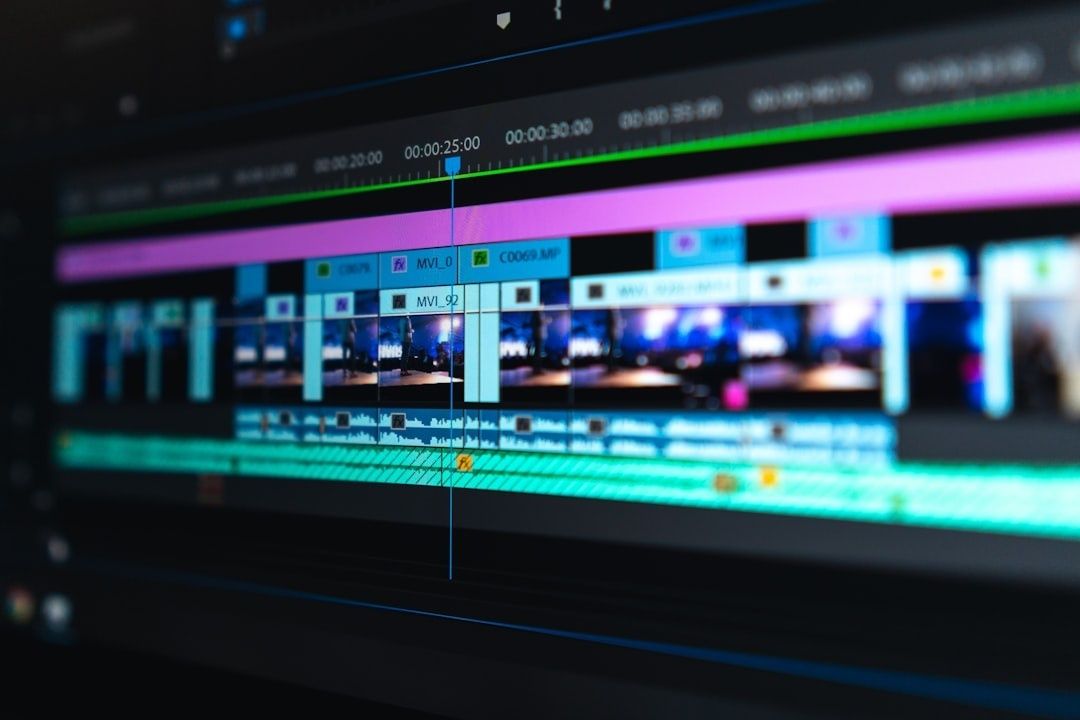
Frame-by-frame analysis begins with controlled observation rather than a search for a single telltale defect. Investigators slow the footage, inspect consecutive frames, and compare areas that should move together. Facial boundaries deserve particular attention. Hair, earrings, glasses, teeth, and the edge of a cheek may shimmer, deform, or become briefly detached from the surrounding image. These effects are not automatic proof of generation, since ordinary video codecs and motion blur can create similar distortions. Their value increases when they recur systematically and coincide with other inconsistencies.
Lighting provides another line of inquiry. A face may appear to be illuminated from a direction that does not match the background, or highlights in the eyes may fail to correspond with a visible light source. Shadows can change shape without a plausible movement of the person or camera. Blinking and eye motion should be examined over a sufficiently long sequence rather than judged from one frozen frame. Synthetic systems have improved considerably, but unnatural timing, rigid gaze behavior, or inconsistent eyelid geometry can still become relevant when combined with boundary and lighting anomalies.
Audio must be investigated alongside the image. Speech may appear visually synchronized while the mouth movements fail to match the expected phonemes, particularly around labial sounds such as “p,” “b,” and “m.” Abrupt changes in room tone, reverberation, background noise, or vocal spectral characteristics can suggest that audio was replaced or spliced. A waveform or spectrogram does not automatically prove editing, but it can help locate transitions for closer listening. The key distinction is between automated flagging, which identifies statistical irregularities, and forensic reconstruction, which asks how the irregularity arose and whether the explanation fits the entire recording.
| Signal | What to examine | Why it remains limited |
|---|---|---|
| Facial boundaries | Edges of skin, hair, glasses, and teeth across adjacent frames | Compression and motion blur can imitate synthetic distortion |
| Lighting and shadows | Direction, intensity, reflections, and continuity of illumination | Low light and rapidly changing exposure complicate comparisons |
| Eye and mouth movement | Blink cadence, gaze, jaw motion, and phoneme alignment | Natural variation differs across speakers, cameras, and frame rates |
| Audio spectrum | Room tone, background noise, edits, and vocal consistency | Transcoding and microphones can alter acoustic characteristics |
Professional analysts also preserve screenshots, timecodes, software settings, and comparison files. That documentation turns an impression into a reviewable process. A second analyst should be able to repeat the inspection and understand why a particular sequence was considered suspicious, inconclusive, or consistent with ordinary recording artifacts.
The Fragility and Utility of Metadata and Content Credentials
Metadata can provide valuable leads, but it is rarely a final answer. Camera files may contain timestamps, device information, GPS coordinates, exposure settings, dimensions, or the name of editing software. Yet images and videos uploaded to social platforms are commonly recompressed and stripped of much of this information. Research examining transfers through email, USB, messaging services, and social platforms found that direct transfers could preserve Exif fields and hashes, while many chat and image-sharing workflows removed metadata and altered file integrity. The findings are discussed in the forensic evaluation of Exif integrity.
Content Credentials offer a more structured approach. The C2PA technical specification describes cryptographically signed manifests that can record how an asset was created, edited, or derived from another asset. A validator can check the signature, the signer”s credentials, trusted timestamps, and associated assertions. This can provide an auditable provenance history, especially when a camera, newsroom, or editing system records the information at the point of creation.
- Credentials can support provenance when they are present and valid.
- A valid signature confirms the integrity of the signed history, not necessarily the truth of the depicted event.
- Missing credentials do not prove that a video is synthetic.
- Metadata should be compared with the source account, file history, visual evidence, and independent reporting.
Newsrooms consequently use metadata as a lead, not a verdict. A timestamp that conflicts with known daylight conditions may justify further investigation. A software tag may indicate that a file was rendered or edited, but editing is not synonymous with deception. Conversely, an apparently clean file may have been created by a synthetic system that leaves no useful identifying metadata.
Corroboration Through Context and Open Source Intelligence
Open-source intelligence places a disputed video inside the physical and informational world. The European Union”s OSINT overview describes the discipline as collecting and analysing publicly accessible information from sources such as media reports, government data, professional publications, internet material, and commercial datasets. Its strength is not the sheer number of posts gathered, but the careful authentication, selection, and contextualization of imperfect evidence.
For video verification, that may mean comparing a building facade with satellite imagery, matching road layouts and distinctive roofs, examining shadows, checking weather records, or locating the same event from another angle. Reverse image and video searches can reveal older footage that has been recaptioned. Local language searches may uncover the first upload or eyewitness accounts that were not visible in English-language results. Satellite maps and landmark measurements have been used in major investigations, including work described by BBC Verify on conflict footage.
OSINT itself is not automatically reliable. Posts may be duplicated, misdated, deliberately staged, or based on mistaken interpretation. A cluster of accounts repeating the same claim is not independent corroboration if they all copied one original source. Investigators therefore need a disciplined sequence that separates discovery from proof.
- Preserve and identify the highest-quality available file, record its URL, uploader, upload time, captions, and visible alterations.
- Trace and compare earlier versions through reverse searches, keyframes, language searches, and related posts, noting changes in cropping, audio, and description.
- Test the physical claim against maps, satellite imagery, landmarks, shadows, weather, transport schedules, and other location or time indicators.
- Seek independent confirmation from witnesses, official records, reputable local reporting, or separate footage, while documenting unresolved contradictions.
During breaking news, this process may produce an interim assessment rather than a definitive label. “The location is consistent, but the date cannot yet be confirmed” is more useful than an unsupported declaration that a video is real or fake. It tells editors and audiences what has been established, what remains uncertain, and what evidence could change the assessment.
The Enduring Need for Human Verification in an Algorithmic Ecosystem
No technical filter can replace adversarial skepticism. Generative systems will continue to improve, while detection models will encounter new tools, new codecs, and new distribution channels. The durable newsroom advantage lies in combining methods: preserve the material, inspect it at frame level, analyse audio, test metadata, trace its origin, and compare the claim with the physical environment. Each layer has weaknesses, but their weaknesses are not identical.
Readers can apply the same discipline before sharing emerging footage. Ask who first posted it, whether the earliest version can be found, what exactly the video proves, and whether independent evidence supports the caption. Treat detector scores, metadata, and visual impressions as clues rather than conclusions. In an algorithmic media ecosystem, accuracy depends less on finding one magical artifact than on building a transparent, evidence-based account that can withstand challenge.